

Living in Lone Mountain: What You Need to Know Before You Buy
If you’re exploring neighborhoods north of Las Vegas, the Lone Mountain area belongs on your short list. Set between the La Madre Foothills and Northwest Las Vegas, this pocket blends big-sky desert scenery with a distinctly low-density, “bring-your-boots” vibe. Think sunrise hikes, horse properties, starry nights—and still being close enough to schools, shopping, and weekend fun.
Below, you’ll find a practical, mom-and-market-savvy guide to living in Lone Mountain: the lifestyle, the parks and trails, housing styles, commute considerations, pros and cons, and smart buyer tips.
Where exactly is Lone Mountain?
Lone Mountain sits in Northwest Las Vegas, immediately north of Summerlin and west of U.S.-95, wrapped around the freestanding butte known as Lone Mountain. The neighborhood takes its name from this rocky peak—an isolated hill with sweeping views of the valley, the Spring Mountains, and Mount Charleston. A popular perimeter loop (≈3.2 miles) encircles the mountain for walkers, runners, and equestrians, and several routes head straight up to the summit.
City planning maps and policy docs identify much of the surrounding area with Rural Neighborhood Preservation / Rural Preservation Overlay land-use—zoning that keeps density low and protects the area’s open, “ranchette” character. Translation: fewer rooftops per acre, more sky per day.
Why people choose Lone Mountain
1) Everyday access to outdoors
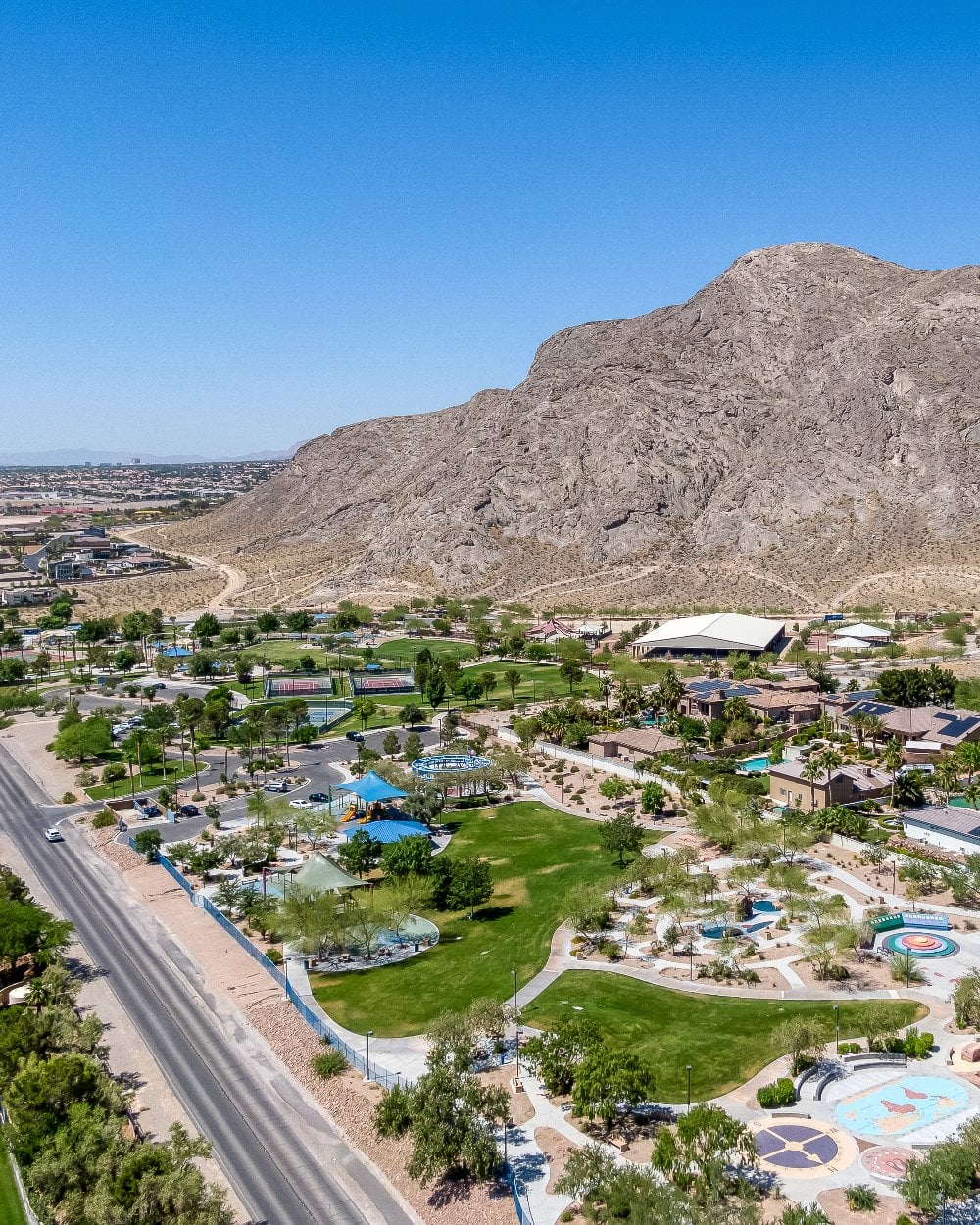
This is one of the rare Las Vegas neighborhoods where the trail really is right outside your door. Lone Mountain Regional Park sits at the base with courts, playgrounds, dog areas, and open turf. Families head out for sunset walks on the perimeter path, while weekend warriors scurry up the rocky summit route for a fast, heart-pounding climb and big views. (Popular stats list the ascent as ~1–2 miles with ~550–650 ft of gain, depending on route.)
Want more nature days? You’re minutes from Floyd Lamb Park at Tule Springs (lakes, peacocks, picnics) and a quick hop to Red Rock Canyon trailheads further south. For a true alpine escape, Mount Charleston is about 40–45 minutes up the hill.
Internal reads to pair with this:
- Visiting Floyd Lamb Park year-round → (your guide)
- Exploring Mount Charleston → (your guide)
- A Local Mom’s Guide to Centennial Hills Parks → (your guide)
2) Larger lots, space for toys & hobbies
Because of the Rural Preservation policy footprint, Lone Mountain includes pockets of equestrian-friendly lots, RV parking, workshops, and “room to breathe.” If you’re coming from a tighter master-planned setting, this can feel like freedom with a fence line. (The RP-O overlay’s stated intent is to maintain low-density areas and rural character.)
3) Views, views, views
Homes ringing the mountain or perched on gentle rises get dramatic Strip-to-peaks panoramas—golden sunrise to neon night. For many buyers, that’s the “why” right there.
Lone Mountain lifestyle snapshot
- Morning: Easy perimeter loop with the dog, school drop-off, quick café run on Farm or Cheyenne.
- Afternoon: Pickleball at the park or bikes around the loop.
- Evening: Golden-hour summit sprint, then dinner on the patio while the Strip sparkles to the southeast.
- Weekends: Rotate between Lone Mountain Park, Floyd Lamb Park lakeside picnics, Gilcrease Orchard for seasonal picking, or a Red Rock day. (Our full Gilcrease Orchard guide explains why locals love that seasonal rhythm.)
Parks & trails to know
Lone Mountain Regional Park & Trail System
- Amenities typically include pickleball, tennis & basketball courts, multiple playgrounds, dog runs, and broad lawns. It’s the de facto backyard for many nearby streets.
- Summit routes: Most hikers clock ~1–1.5 hours roundtrip with ~550–650 ft of gain; dirt and rock underfoot, no shade—great conditioning hike.
Red Rock access
You’re a short drive to Calico Basin and the 215/Charleston corridor for classic Red Rock outings (Calico Tanks, Ice Box Canyon). Great for families leveling up from park days to real desert adventures.
Floyd Lamb Park
One of the valley’s largest green oases—four fishing ponds, historic ranch core, shady groves, wildlife—and a quick, easy drive from Lone Mountain.
Want a deeper dive? Read our post: Visiting Floyd Lamb Park: A Year-Round Retreat (internal link)
Homes & streetscape
You’ll find a mix of custom homes, single-story ranch, semi-custom infill, and small gated pockets. In RP-O areas you’ll notice wider setbacks, occasional horse facilities, and fewer HOA-style uniformities. Immediately east and south, you’ll also encounter more conventional subdivisions offering lower-maintenance living if you prefer the convenience of an HOA.
If you’re weighing Lone Mountain against nearby Summerlin or Centennial Hills master-plans, check out:
- Centennial Hills vs. Summerlin for Families (internal link)
- A Local Mom’s Guide to Centennial Hills Parks (internal link)
Shopping, dining & daily convenience
Lone Mountain is “quiet-first” by design. Daily needs—groceries, cafés, fitness—cluster along Durango, Buffalo, Cheyenne, Farm, and Ann. For broader shopping and dining, Downtown Summerlin is a quick hop south; medical and everyday services are spread through Centennial Hills and along U.S.-95. (The city’s neighborhood guide highlights Lone Mountain’s easy trail and park access, low-density housing, and independent feel.) Las Vegas Nevada
Commute & connectivity
Proximity to U.S.-95 keeps Downtown and central job hubs within practical reach, while the 215 loops you toward Summerlin, the southwest, or the airport. If your schedule is 9-to-5 downtown, expect traditional freeway patterns; many locals offset with flex hours or partial remote. A common local claim is “≈25 minutes to Downtown” under favorable flow—your mileage will vary.
Schools
School assignments shift with new construction and boundary updates. The safest approach is to verify current zoning with the district before you write an offer, and if private options matter, map your short list with drive-times during real commute hours.
Pros & cons (the honest version)
Biggest pros
- Low-density feel with room for hobbies (trailers, horses, workshops in select zones). Rural Preservation helps protect that character long-term.
- Trail-forward lifestyle—perimeter loops, summit climbs, park courts, dog runs.
- Scenic value—desert sunsets and Strip-at-night views never get old.
- Fast access to nature—Floyd Lamb Park, Red Rock, Mount Charleston for true four-season outdoor life.
Possible trade-offs
- Fewer master-planned amenities (no massive community centers or HOAs dictating uniformity—great for independence, less so if you crave built-in events).
- Some unpaved stretches/dust on quieter lanes near the mountain; occasional coyote/burro sightings along the open edges.
- Daytime heat & no shade on trails—summer hiking is strictly sunrise or sunset. (Trail pages emphasize the exposure; plan accordingly.)
- Street lighting is modest in preservation pockets; wonderful for stargazing, but plan your exterior lighting thoughtfully.
How Lone Mountain compares to nearby favorites
- Versus Summerlin: You’ll trade HOA amenities and uniform polish for space, individuality, and lower density. If pickleball in the backyard and a shop for your toys beats a community pool, Lone Mountain wins.
- Versus Centennial Hills: Centennial feels more suburban-convenient; Lone Mountain feels more “country-in-the-city.” Many families love living near Centennial’s services while choosing Lone Mountain for the lot and lifestyle.
- Versus La Madre Foothills/Providence: Similar outdoor DNA, but Lone Mountain centers around one iconic butte and a strong preservation ethos.
Related reads for your audience:
- Centennial Hills vs. Summerlin for Families (internal link)
- Top Outdoor Activities in La Madre Foothills (internal link)
- What It’s Like Living Near Gilcrease Orchard Year-Round (internal link)
Buyer tips specific to Lone Mountain
- Walk the block at sunset. You’ll hear how quiet it really is, feel the breeze off the mountain, and understand traffic flow at peak recreation hours.
- Ask about RP-O and setbacks. If you want RV gates, a barn, or a workshop, confirm zoning and CCRs early. (RP-O language describes intent and compatible use patterns.)
- Trail access matters. Homes closer to the perimeter loop or park trailheads often command a premium—and sell faster. Bring walking shoes to your showing.
- Plan for landscaping & dust. Xeriscape done right is gorgeous here. Consider wind and sun angles for patios, shade sails, and play spaces.
- Mind the micro-commute. Test your actual routes to U.S.-95, Downtown Summerlin, and school pick-ups at the times you’ll travel.
- Love your lighting. Lower ambient street lighting in preservation areas means thinking through your own down-lighting for paths, patios, and security—while keeping the night sky dark and beautiful.
Final word: Who thrives in Lone Mountain?
Families who want space, independence, and a trail-centric lifestyle. Equestrians, hobbyists, and sunset chasers. Buyers seeking a Northwest Las Vegas address that feels a little more rural but still connected. If you read our guides to Floyd Lamb Park, Gilcrease Orchard, Mount Charleston, and Centennial Hills Parks, you’ll notice a theme: life up here is about quality of everyday outdoor time. Lone Mountain distills that into a neighborhood.
If that sounds like “home,” this area deserves a walk-through—preferably at golden hour.
Check out this article next